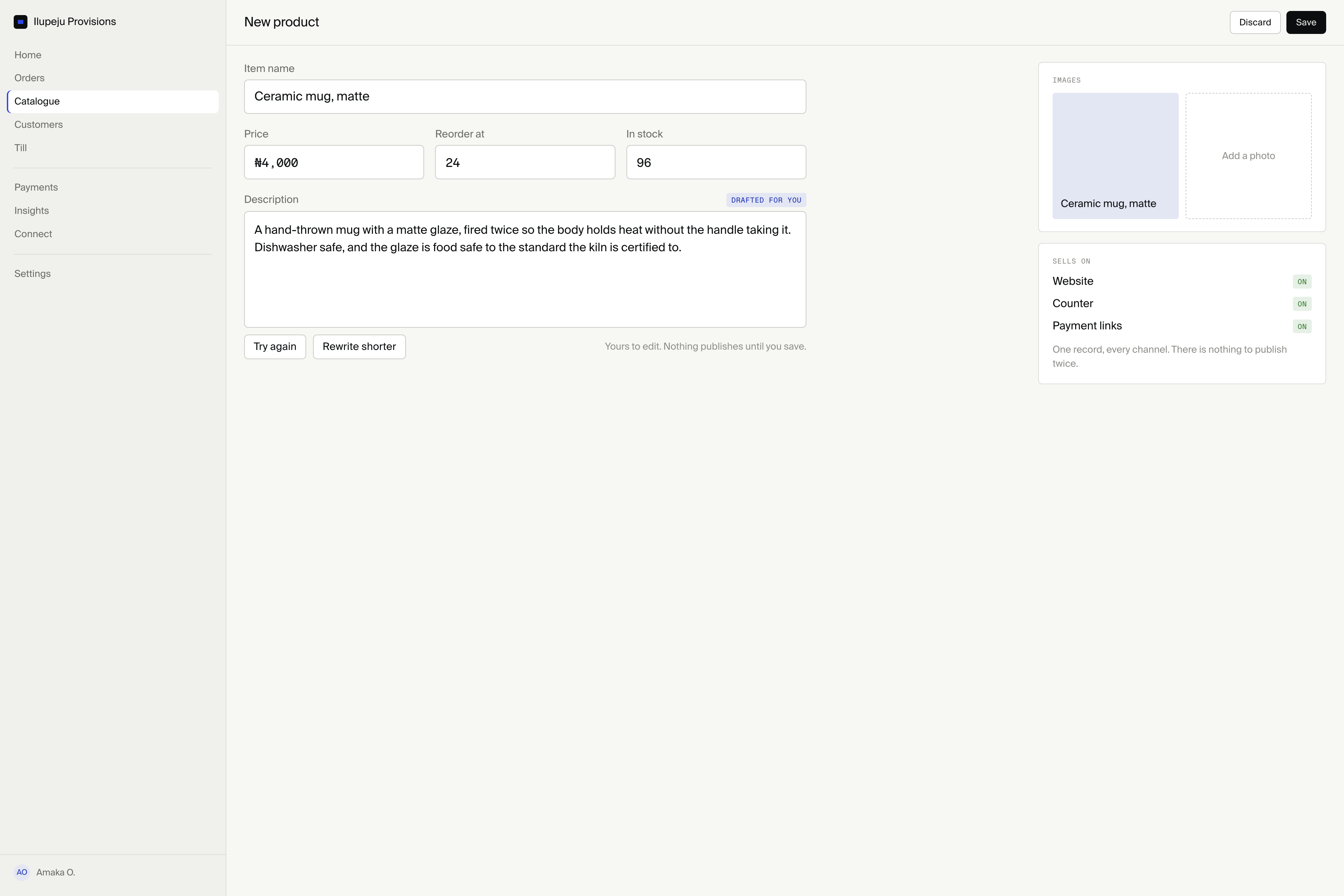
Prepare the configuration.
Create the merchant, locations, staff access, taxes, fulfilment choices, payment connections, and the packages their business needs before importing operational records.
Commerce
Intelligence
Infrastructure
 Why institutions choose Box
Keep the brand, records, rails, and merchant relationship.
Why institutions choose Box
Keep the brand, records, rails, and merchant relationship.
Start here
By merchant activity
By deployment
 See it running
OlivePay licensed Box. The tills are already in the field.
See it running
OlivePay licensed Box. The tills are already in the field.

Keep source records traceable
Choose when each channel moves
Keep every exception visible
Accept real workflows before launch
Create the merchant, locations, staff access, taxes, fulfilment choices, payment connections, and the packages their business needs before importing operational records.
Map source fields into Box, validate catalogue totals and variants, preserve required source identifiers, and report customer or product records that cannot be accepted.
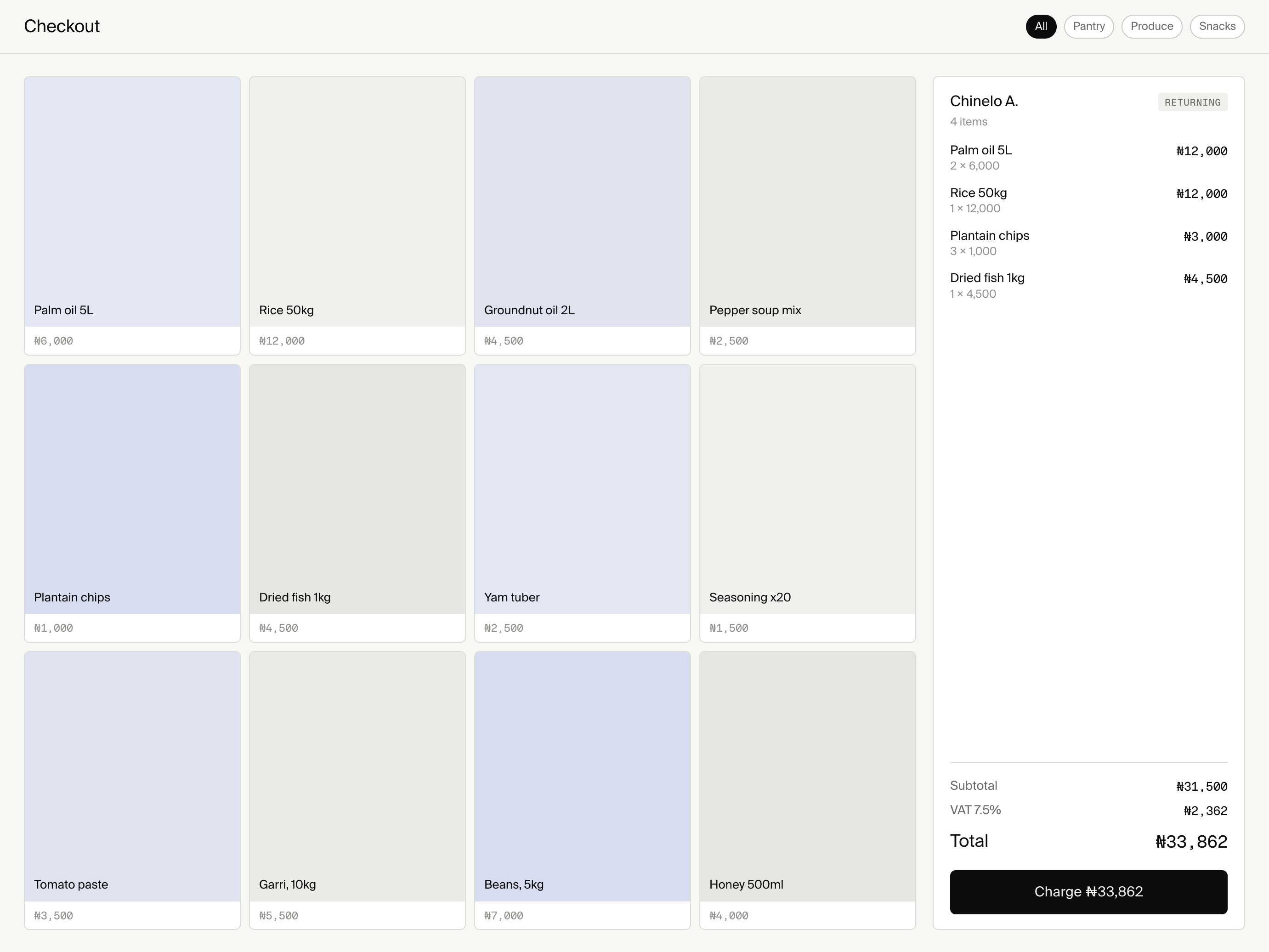
Run representative orders, refunds, bookings, receipts, permissions, and settlement outcomes. Move each channel only after its checks pass and keep every exception visible.
No two source systems are identical. Before anything moves, establish what the current system contains, what must remain available, and what can be left behind.
Identify catalogue items, variants, prices, stock, customers, locations, staff, orders, bookings, invoices, and identifiers used by connected systems.
Record every place the merchant trades today, including websites, counters, payment links, social channels, and back office workflows.
Agree which records must reconcile, who signs off each stage, what can run in parallel, and what would stop a cutover.
Include merchants with different catalogues, locations, channels, and operating patterns so the first cohort tests the range the estate contains.
Measure completed trading, reconciled records, outstanding exceptions, support demand, and time to acceptance. Then update mappings, guidance, training, and support routes.
A merchant is migrated when agreed records reconcile, required channels work, real workflows complete successfully, and the institution and merchant accept the result.
See the commerce engine
Select merchants, approve data handling, control payment relationships, communicate the move, and decide when each cohort is ready.
Provide the platform model, configuration path, import interfaces, validation outputs, and technical support agreed for the licence.
Verify the catalogue, staff access, channels, opening position, and first completed workflows before cutover is complete.
No. Box first maps the exports or APIs the source makes available. Clean structured records can move directly; incomplete or incompatible records need an agreed correction path.
No. The institution can define repeatable cohorts, but each merchant is validated against the channels, data, and packages they actually use.
They can where the source system and payment setup allow it. The migration plan defines the overlap, the source of truth during that period, and the reconciliation required before cutover.
The institution decides which history is required for operations, support, reporting, and regulation. Box preserves accepted source identifiers so migrated records can be traced.
When the agreed records reconcile, required channels work, real workflows complete successfully, and the institution and merchant accept the result.
Bring the source systems, merchant segments, required records, channels, and rollout constraints. We will turn them into a plan that can be tested before it scales.